The end of the Solar System

The end of the Solar System

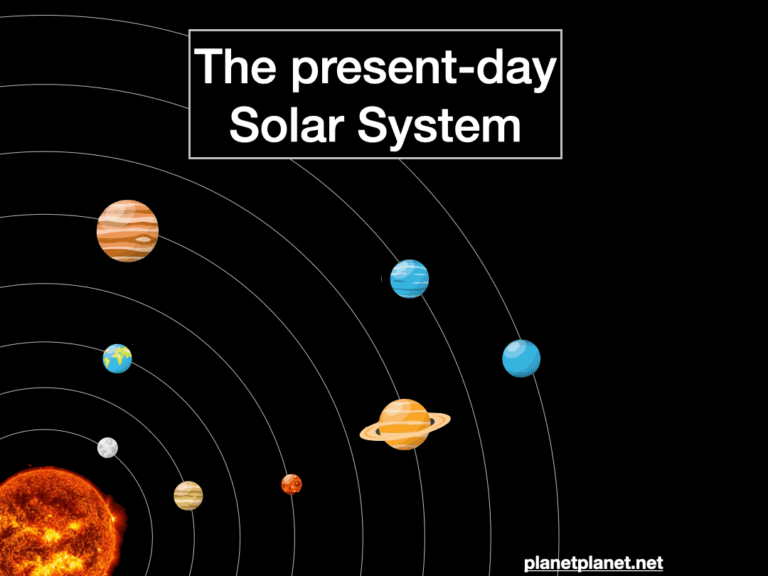
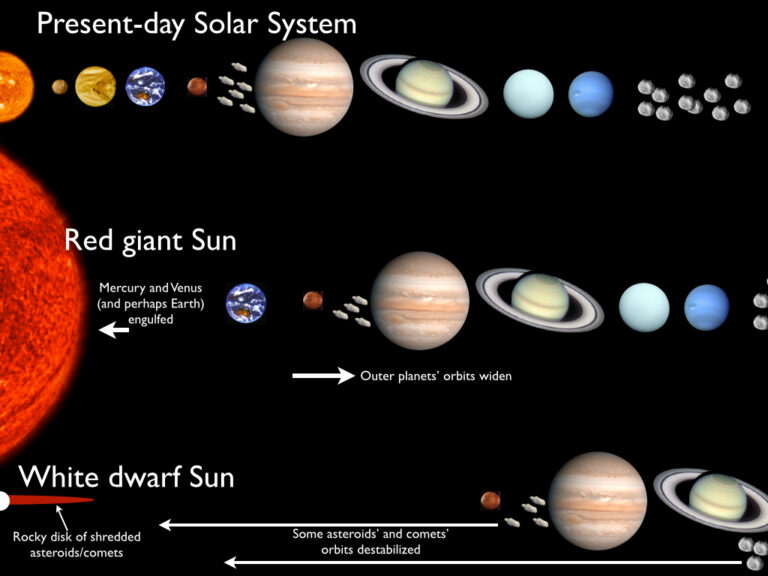
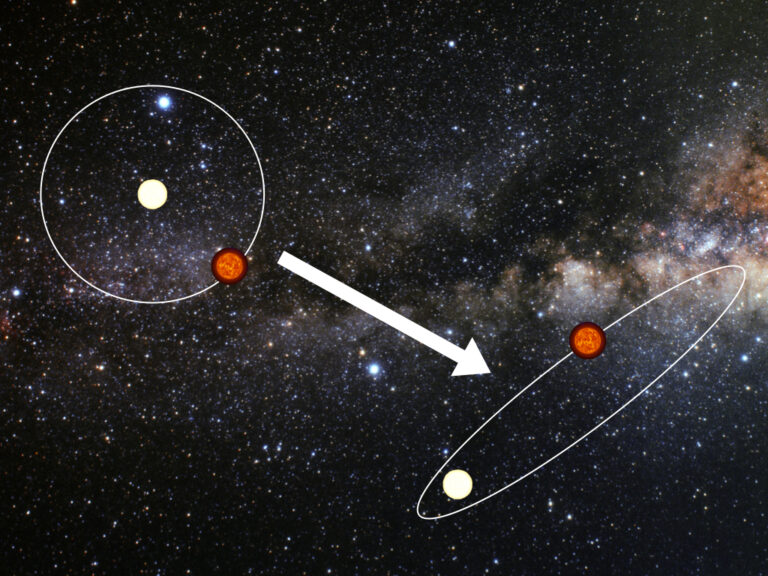
Earth will lose its oceans. Chaos may destabilize the rocky planets. The Sun will go red giant and swallow the inner planets. The outer planets’ orbits will widen as the Sun becomes a white dwarf. Passing stars will destabilize the planets’ orbits and, in about 100 billion years, finally strip away the last planet.

Orbital migration

Orbital migration

TL;DR: Earth- to Neptune-mass planets migrate through the disk — usually inward, and fast. Giant planets carve gaps in the disk (“anti-donuts”) and migrate slowly, usually inward. Things can get crazy when lots of planets migrate together.

From planetesimals to planetary “embryos”

From planetesimals to planetary “embryos”

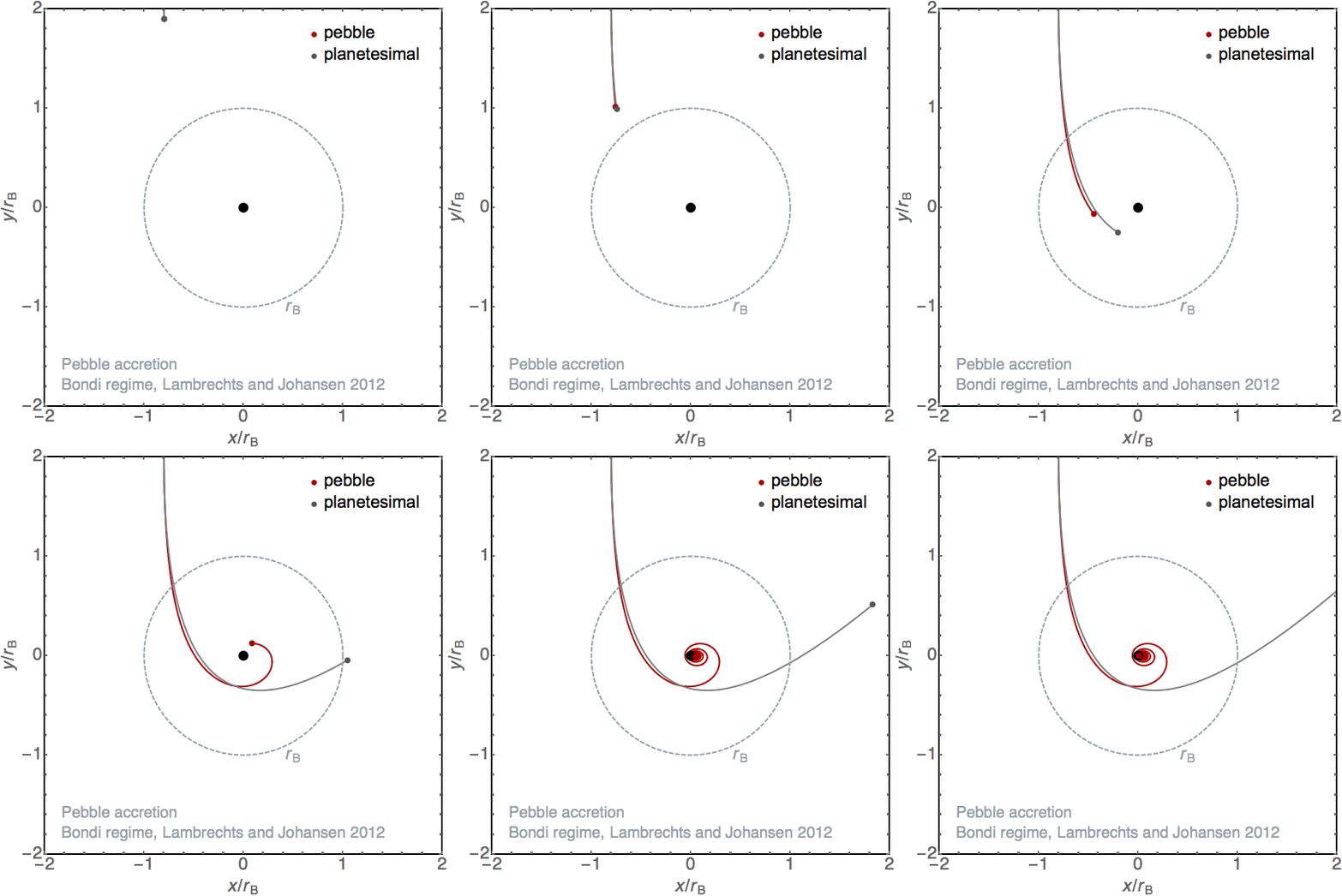
This is chapter 3 in the Solar System’s story. We’re chugging along, growing bigger and bigger things… Planetesimal accretion After mountain-sized (~100 km-scale) planetesimals form from concentrations of drifting pebbles, they continue to grow in two ways. The simplest growth route for planetesimals is simply to crash into other planetesimals; this is called planetesimal accretion….

How Borisov found Borisov (the second interstellar object)

How Borisov found Borisov (the second interstellar object)

To start things off, a limerick: My dear old friend ‘Oumuamua I asked her — What’s up? What is new-ah? “I’ve been thinking of That guy Borisov The interstellar number Two-ah!” Figuring out what’s up with a new population of astronomical objects is like going to a party without knowing the dress code.  Here’s what’s…

Is Pluto a mega-comet?

Is Pluto a mega-comet?

Short answer: Well sort of, but it’s more useful to think of it as being built from the same stuff as comets. Like an Uncle of the comets. Read on for an explanation. Earlier this week my wife mentioned a headline she saw.  “Pluto is a giant comet?  Whoa!” It was all over the place:…

A cigar from another star

A cigar from another star

In Rendezvous with Rama (by Arthur C. Clarke), a mysterious object is discovered passing through the Solar System.  The object has a strange shape — it’s a giant cylinder.  It was discovered by the Spaceguard survey, designed to find objects that might impact Earth (so-called near-Earth objects).  Spoiler alert: the cylinder is a spaceship sent…

Giraffes and planets

Giraffes and planets

Giraffes are covered in patches.  The patches are brown and the space in between the patches is white.  Everyone knows this. Here is something you probably didn’t know: you can see those patches in infrared light.  In simple terms, infrared light measures heat (at least at the temperatures we are used to in everyday life). …

Build a better Solar System

Build a better Solar System

[UPDATE: a new series on building the ultimate Solar System starts here] The Solar System is a disappointment.  It does contain an inhabited planet with forests and oceans and frisbees and beer (Earth). But it only has one.  There are a couple worlds with some potential, but they are pretty disappointing too.  Jupiter’s moons Europa…